We named this campaign after the very fear it fights.
Yes — we googled it too. Search “psycho next door” and almost everything that comes back is a killer: thrillers, true-crime, horror films, a murder escape room. That reflex — psycho equals murderer — is exactly the stigma this campaign exists to break.
Here is what a search actually returns
This is a fair summary of the top results and the AI overview for the phrase. Notice the pattern: every single one equates “the psycho next door” with a hidden, dangerous murderer. Nobody is talking about a real human being.
“Psycho Next Door” most commonly refers to a mystery / thriller story about people who realise a killer is living among them — alongside a true-crime podcast, a horror short film and a murder-themed escape room.
- Mystery / thriller novelA story about teenagers in a safe house who realise a killer is among them.
- True-crime podcastAn episode investigating a real criminal case.
- Horror short filmA 2018 mystery about a sinister new neighbour.
- Escape roomAn "interactive" game built around catching a hidden murderer.
The reflex is the stigma
Search engines and AI overviews don’t invent meaning — they mirror back, at scale, the cultural pattern they were trained on. The fact that “psycho next door” returns nothing but killers is a measurement of how thoroughly the word “psycho” has been welded to the idea of a murderer by decades of films, tabloids and true-crime.
That is not a harmless quirk. It is the engine of real-world harm. The same reflex that makes “psycho” a synonym for “killer” is what makes real people with psychosis feared, avoided, turned down for jobs and homes, and left isolated. The stereotype on the screen becomes the discrimination in the street.
Who the psycho next door actually is
Here is what the evidence says about the person the search results are so afraid of. The truth is almost the exact opposite of the horror trailer.
more likely to be a victim of violence than a perpetrator of it
never commit a violent offence at all
of societal violence is attributable to serious mental illness
Questions people actually search for
What is Psycho Next Door?
Psycho Next Door is a UK anti-stigma campaign about schizophrenia and psychosis. It deliberately borrows a frightening phrase — the "psycho next door" — in order to dismantle it, replacing the horror-film stereotype with evidence about who people living with schizophrenia really are.
Is the "psycho next door" actually dangerous?
No. This is the myth the campaign exists to correct. People with schizophrenia are far more likely to be victims of violence than perpetrators of it — by one robust estimate around 14 times more likely. The large majority never commit a violent offence, and serious mental illness accounts for well under 10% of societal violence. The neighbour you should picture is an ordinary person, not a killer.
Why does searching "psycho next door" only show killers and horror stories?
Because the word "psycho" has been culturally welded to the idea of a hidden, dangerous murderer — by films, tabloids and true-crime media. A search for the phrase returns thrillers, true-crime podcasts and horror shorts about a killer among us. That reflex is exactly the stigma that makes real people with psychosis feared, avoided, unemployed and isolated.
Why name an anti-stigma campaign "Psycho Next Door"?
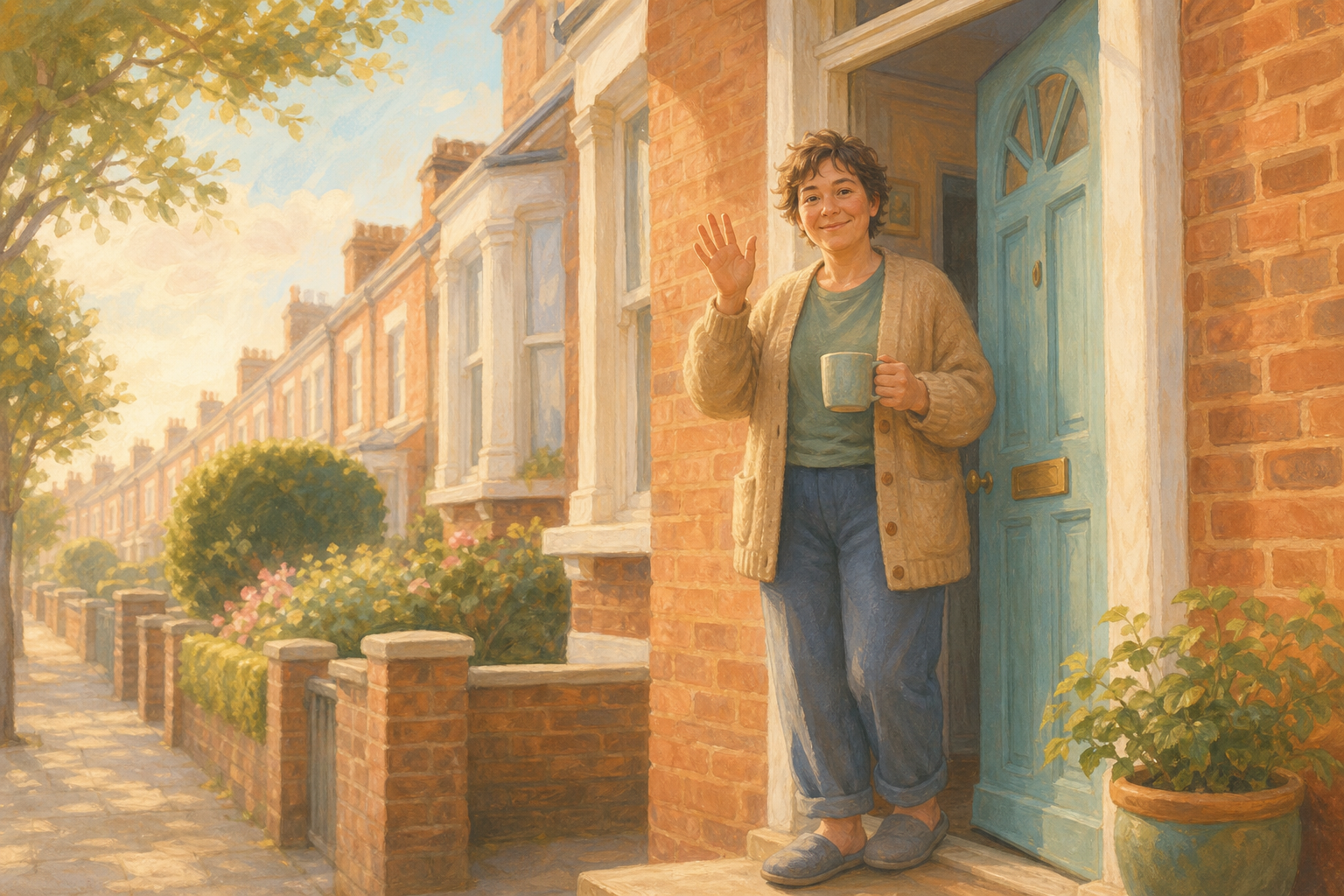
It is a bait-and-switch, by design. The name lures in the very fear it intends to break: it looks like a horror trailer, then reveals an ordinary human being making a cup of tea. Naming the campaign after the stereotype lets us confront it head-on — and the brand itself morphs from "Psycho Next Door" into "Human Next Door".
What does the word "psycho" really mean — and is it offensive?
"Psycho" is a slur. It is not a diagnosis. It collapses serious, treatable health conditions into a single cartoon of menace, and using it as shorthand for "dangerous" causes real harm to real people. Schizophrenia is a mental health condition that, with support and treatment, people live full, ordinary, loving lives alongside.
Open the door on the real story
The name is a bait-and-switch — it borrows the fear to break it. If this changed the picture in your head even a little, that is the whole point. Keep going.
You are not alone. In the UK you can call Samaritans on 116 123 free, any time, or NHS 111 for urgent mental-health help. Outside the UK, find a helpline at findahelpline.com.