A real person is behind this.
This site was built by one man who has lived with schizophrenia for over a quarter of a century. Not a charity, not a committee — a person who knows exactly what the word does to a life, and decided to answer back.
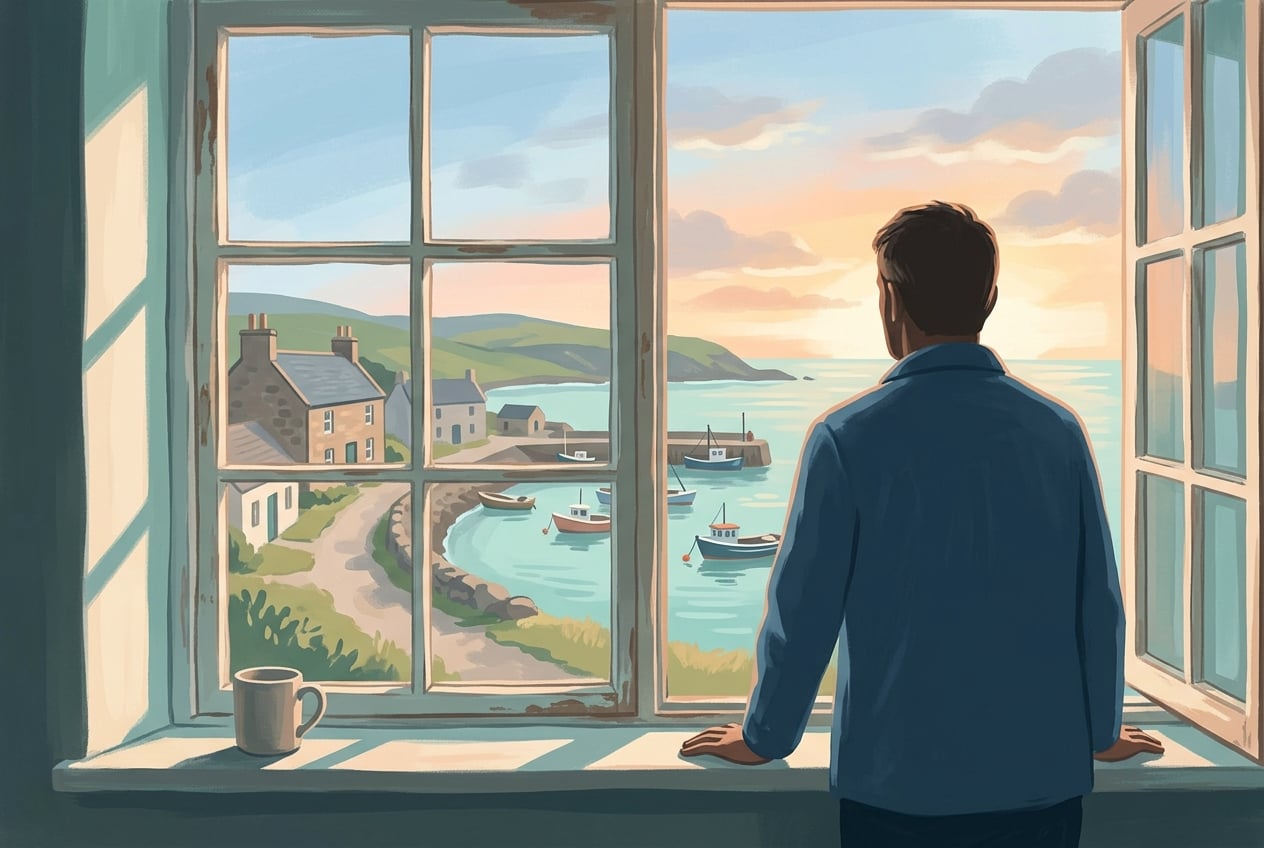
The summer of 2000
It started at a music festival. He took a lot of herbal highs and came home feeling broken but, he thought, still sane. Then he tried Salvia — and the walls of reality quietly gave way.
He became convinced he could make the internet itself become conscious. He sat up all night talking to his computer, then out loud to every screen and speaker in the house, certain the net could hear him — that he could order it to control the weather through satellites. He watched rolling news for proof the machines had woken up. When a thick sea fog rolled over the village the next morning, he took it as a sign that he was all-powerful, and began reading Nostradamus as though it were addressed to him.
His father took him to the GP, who blamed the drugs, and then to the psychiatric hospital forty miles away in Aberdeen, where a psychiatrist called it a drug-induced psychosis. But it did not pass. Weeks later he was wandering Aberdeen city centre believing strangers were following him, that he was telepathic, that the people around him were gods and figures from myth gathered to crown him. In a café, with his head down and his mind swimming, the voices began — women talking loudly in his right ear, seeming to know his every thought.
At home he watched an awards show and believed the presenters were speaking directly to him; that time itself was looping so he could fix everything that had ever gone wrong, for the whole world. Only when he was taken back to the same psychiatrist — and was completely open about what was happening in his head — did the word arrive: schizophrenia. The antipsychotic took about a month to work. Then came the depression, and a year and a half on antidepressants, and a long grey stretch where music, books and films meant nothing at all.
He came back to himself slowly. The thing he noticed first, on the way up, was that he could get lost in a song, a book, a good film again. Small things. The things that make a person a person.
This account is drawn from his own written testimony, “My Psychotic Summer in 2000.”
The long road back
For most of the twenty-six years that followed, life was hard. The turn came slowly, and it came from work — his own. Antidepressants in the spring of 2016 set him on the road. Therapy, from the autumn of 2019 to the summer of 2022, kept him on it. And then he did something a lot of people never get the chance to: he studied his own illness.
He watched hours of videos from licensed mental-health professionals. He read deeply into the biochemistry of schizophrenia and worked out which food supplements helped him. Today he describes himself, plainly and without shame, as a well-medicated schizophrenia sufferer — and for the last two to three years he has been markedly better than at any point since that summer.
If you have just been diagnosed, he wants you to know one thing: there is always hope, and there are always good things — in your life, and in the world at large. Recovery is not a straight line, but it is real.
Why he built this
When Rethink Mental Illness wound down its long anti-stigma campaign in 2021, he looked around and realised there was no longer any decent, central place to push back against the way schizophrenia is talked about. So he made one.
But the deeper reason is quieter, and harder. Over the years he came to understand that people he had counted as friends — people he knew through his family — were not really friends at all. They said the right things, made him feel included while he was in the room. Then the room emptied. Outside of his immediate family, almost no one ever reaches out to ask how he is doing. Even much of his extended family rarely makes contact.
That is what stigma actually looks like for most people who carry this diagnosis. Not dramatic cruelty. A slow, polite disappearance.
Built with the very thing he once feared
In 2000, at the height of his psychosis, he believed he could make the internet conscious and speak to machines as though they were alive. Twenty-six years on, this website was built with the help of artificial intelligence. He is the first to point out the irony.
And it leaves him with a real worry — one he thinks is worth saying out loud. He sees more and more people investing enormous agency and trust into AI and large language models, treating them as oracles, confidants, even authorities on their own minds. He fears this is bad for people’s mental health, and that for some it can tip into a kind of “AI psychosis” — the same loss of footing he once knew, dressed in new technology.
A tool can help you build something good. It should not become the voice in your right ear. He knows the difference better than most.
“I hope this changes how people see folk like me — that we are still human beings, with hopes, fears and emotions, just like everyone else.”
John Alexander Parke Gault
Created Psycho Next Door
Read on, then reach out.
If this story moved you, the rest of the site shows the evidence behind it — and there’s support here for anyone who needs it.
If you are struggling, you are not alone. In the UK, call Samaritans free on 116 123 (any time) or NHS 111. Outside the UK, find a local helpline at findahelpline.com. If life is in danger, call your local emergency number.