Most people never meet schizophrenia. They meet the version on screen.
For the majority of us, almost everything we “know” about schizophrenia was taught by films, television and newspaper headlines — and that picture is wildly distorted. This is a fact-checked look at how media and culture build the fear, what it costs real people, and how the very same screens can take it back down again.
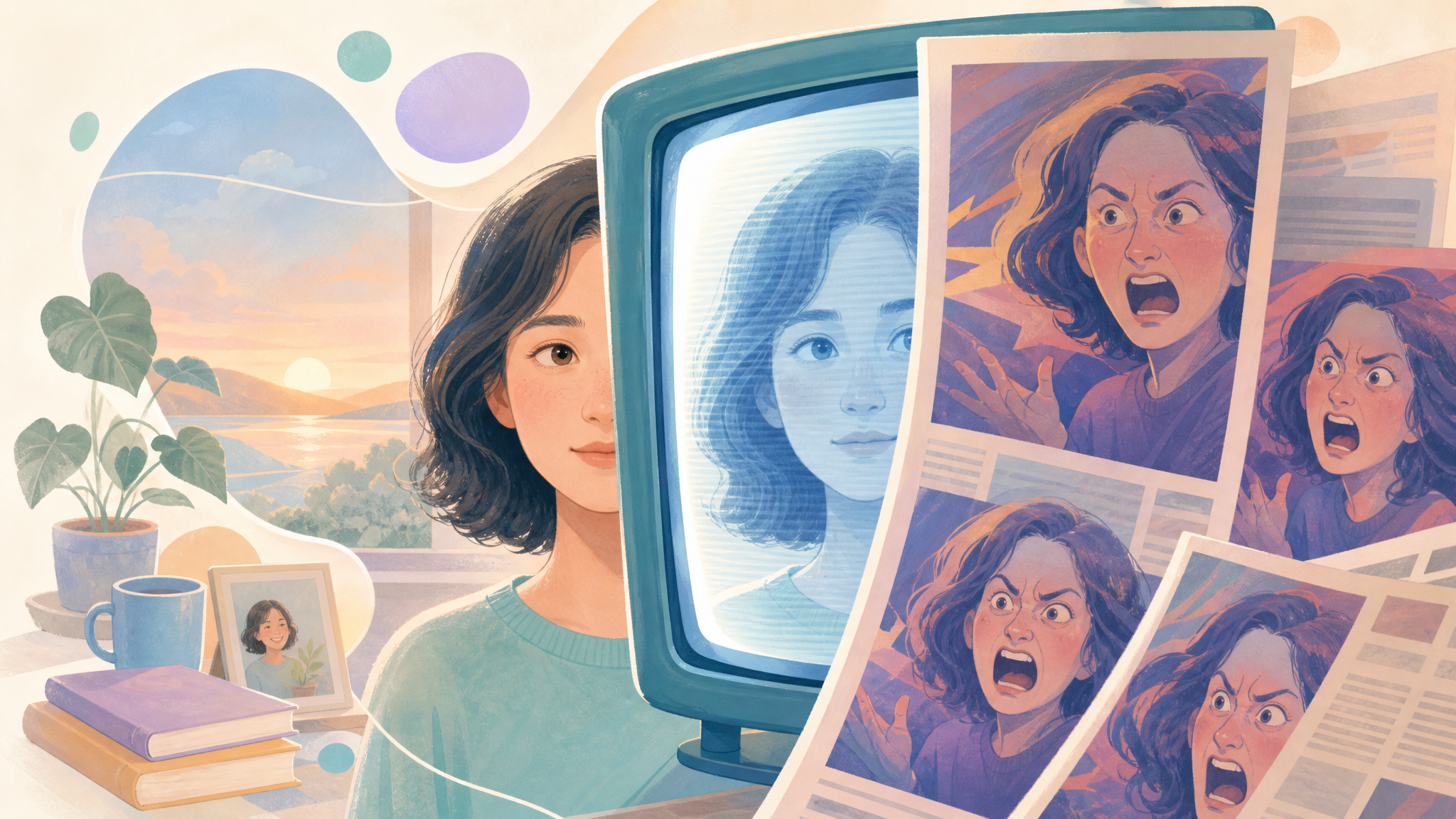
UK newspaper articles that mention schizophrenia are 6.37 times more likely to be stigmatising than articles about other mental health conditions — even as coverage improved overall.
In a content analysis of 41 English-language films, the large majority of lead characters with schizophrenia were shown being violent — while in reality fewer than 1 in 10 violent crimes is linked to the condition.
In the Royal College of Psychiatrists’ 1998 "Changing Minds" survey, 70% of the British public believed people with schizophrenia were violent and unpredictable. That belief is media-made — and it is what this campaign exists to change.
After EastEnders told Stacey’s postpartum-psychosis story with the charities Mind and APP, Action on Postpartum Psychosis saw a 400% rise in people reaching out. Stories told well save lives.
What films show — and what’s actually true
Fictional film and television don’t just get schizophrenia slightly wrong. They build a caricature that bears almost no resemblance to the lived reality — and then repeat it until it feels like common sense.
The screen is a funhouse mirror
What a content analysis of 41 English-language films (1990–2010) actually showed
For comparison: in reality, fewer than 1 in 10 violent crimes is linked to schizophrenia, the lifetime suicide rate is around 10–16%, and the quiet “negative” symptoms shown in just 5% of films are present in roughly 60% of patients.
A vast gulf between screen and reality
A content analysis of 41 English-language films (1990–2010) with a lead character who has schizophrenia found a pervasive pattern of misinformation and extreme violence: the majority of characters were violent, nearly a third of those went on to kill, and around a quarter died by suicide. In reality, fewer than 1 in 10 violent crimes is linked to schizophrenia, and people living with it are far more likely to be victims than perpetrators.
Owen (2012), Psychiatric Services — content analysis of 41 films.
Even the symptoms are wrong
Films love the dramatic "positive" symptoms — vivid visual hallucinations and elaborate delusions. But the "negative" symptoms that dominate most people’s real experience — deep apathy (avolition), flat affect and social withdrawal, present in around 60% of patients — appeared in just 5% of films. The everyday reality of the condition is almost entirely invisible on screen.
Owen (2012); clinical symptom-prevalence data.
Three tropes do most of the damage
Across decades of film and television, the same three caricatures recur: the violent slasher villain, the possessed or supernatural figure, and the exotic "genius" savant. Each one replaces an ordinary, treatable human experience with something frightening, magical or freakish — and each one teaches audiences to keep their distance.
The Mediatized Psychosis (campaign source review).
The violent criminal & slasher villain
The oldest and most damaging trope: the unpredictable killer whose diagnosis is the explanation for the horror. It frames a whole group of people as a threat to be feared rather than neighbours to be known.
e.g. Norman Bates in Psycho; countless thriller and crime-drama "psychos".
The possessed or supernatural figure
Hallucinations and delusions are recast as magic, prophecy or possession — turning a medical experience into a horror device and quietly suggesting the person is not quite human.
e.g. Donnie Darko; supernatural-horror "visionaries".
The exotic genius or "supercrip"
A gentler-looking trope that still distorts: the tortured savant whose brilliance redeems their illness. It is rare in real life, and it implies that a person only matters if they are extraordinary.
e.g. A Beautiful Mind; The Soloist.
A cartography of fear, drawn word by word
Newspapers rarely break the rules outright. Instead they build an atmosphere — pairing one word with violence, again and again, until the association feels like fact.
Which diagnoses get the worst press
Relative odds an article is stigmatising (King’s College London, 6,731 articles, 2008–2019)
In over 15 million words from nine UK national newspapers, 14 of the 25 verbs most distinctively attached to the word “schizophrenic” describe violence:
Source: Balfour (2019), Lancaster University corpus study, 2000–2015.
Everyone improved — except schizophrenia
Across the decade of the Time to Change campaign, English newspaper coverage of mental illness genuinely got kinder. But the improvement was not shared equally. Of 6,731 articles analysed, those mentioning schizophrenia were 6.37 times more likely to be stigmatising than articles about other diagnoses — while depression coverage was actually less likely than average to stigmatise. Progress reached almost everyone, and stepped around schizophrenia.
Rai et al. (2021), Epidemiology and Psychiatric Sciences (King’s College London), 2008–2019.
A linguistic signature of violence
A corpus study of 16,466 articles — over 15 million words from nine national UK newspapers, 2000–2015 — found that 14 of the 25 verbs most distinctively paired with the word "schizophrenic" describe violent acts: attack, stab, murder, behead, slash. The press rarely uses slurs outright; instead it builds an atmosphere of danger word by word, until "schizophrenic" simply reads as "dangerous".
Balfour (2019), Lancaster University corpus study.
The careless metaphor
The word is also borrowed as a lazy metaphor for anything split or contradictory — a "schizophrenic economy", a "schizophrenic performance". It traces back to the term’s Greek roots (schizo, to split; phren, mind), and it is wrong: schizophrenia is not a split personality. Tabloids tend toward the "violent criminal" framing; broadsheets toward an "othering" eccentric-genius one. Both keep the person at arm’s length.
Balfour (2019); The Mediatized Psychosis source review.
Fear on a page becomes distance in real life
Stigma isn’t an abstraction. It changes who gets a flat, a job, a fair hearing from a doctor — and, at the far end of the chain, how long people live.
Would you welcome them?
Public willingness to accept “Andy” (schizophrenia) vs “Stephen” (depression) — Attitudes to Mental Illness, England 2023
The gap narrows over time but never closes — and it is widest where trust matters most.
It shapes how we treat real people
Media fear becomes social distance. In England’s Attitudes to Mental Illness survey, the public is consistently less willing to live beside, marry or share childcare with a person described as having schizophrenia ("Andy") than one with depression ("Stephen"). There is real long-term progress — acceptance of "Andy" marrying into the family rose from 37% in 2007 to 72% in 2023 — but a stubborn gap remains, and the broadest stigma measures dipped again in 2024 for the first time in over a decade.
Attitudes to Mental Illness, England (2007–2024).
The stigma spreads to families
It doesn’t stop with the person diagnosed — it spills onto those around them, what researchers call "courtesy stigma". Studies of caregivers report high personal stigma in around 1 in 5, with many uncomfortable even disclosing a relative’s diagnosis; in the US, 43% of caregivers felt the public looks down on the families of people with mental illness. Shame keeps whole households silent and isolated.
Caregiver-stigma studies (North India, 2017; United States, 2013).
And it can shorten lives
Fear feeds self-stigma; self-stigma feeds avoidance; avoidance feeds "diagnostic overshadowing", where physical symptoms get blamed on the psychiatric label. At the end of that chain is the widest health gap in the NHS — people with severe mental illness dying 15 to 20 years earlier, mostly from preventable physical illness. A headline is never just a headline.
See our Health & Care page for the full, sourced picture.
The end of that chain — the 15–20 year life-expectancy gap and “diagnostic overshadowing” — is set out in full, with sources, on our Health & Care page.
See the health gapStories told well change lives
Here is the hopeful part: the same medium that built the fear is one of the most powerful tools we have to dismantle it. When storytellers get it right, people reach out for help.
after one storyline
When EastEnders got it right
Working with the charities Mind and Action on Postpartum Psychosis, EastEnders told Stacey’s postpartum-psychosis story to over 10 million viewers. APP saw a 400% rise in people getting in touch; in Mind’s research, 25% of viewers were prompted to seek support for their own mental health, and 44% said it changed who they thought could be affected.
Soap operas change minds
The same medium that spreads fear can dismantle it. EastEnders worked with the charities Mind and Action on Postpartum Psychosis on Stacey’s postpartum-psychosis storyline, watched by over 10 million people — and APP saw a 400% rise in people getting in touch. In Mind’s research, 25% of viewers were prompted to seek support for their own mental health, and 44% said such storylines changed who they thought could be affected.
Mind; Action on Postpartum Psychosis; BBC EastEnders (2015–16).
Holding the media to account
Audiences and advocates are pushing back. Peer-led media-monitoring projects such as StigmaWatch invite the public to report stigmatising or inaccurate coverage and ask outlets to do better — turning passive viewers into an accountability network and giving people with lived experience a say in how their story gets told.
StigmaWatch (peer-led media-accountability project).
Responsible reporting is a solved problem
We already know what good looks like. The NUJ, Mind and Rethink publish clear guidelines: lead with people, not labels; avoid linking violence to diagnosis without evidence; never use "schizophrenic" as an adjective for chaos; include recovery and lived-experience voices; and always signpost support. None of it is hard — it just has to be chosen.
NUJ; Mind; Rethink Mental Illness reporting guidelines.
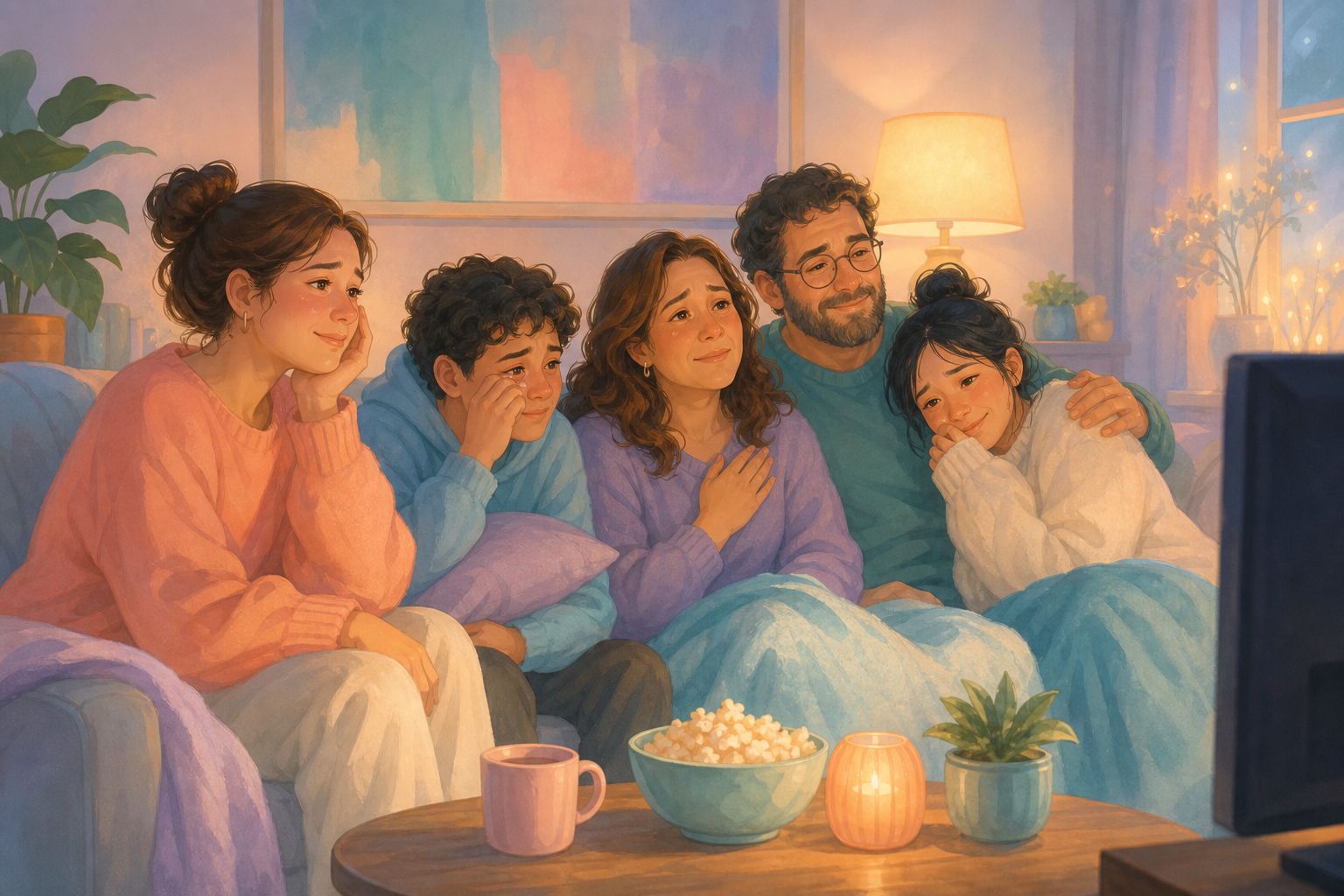
Tell a better story
Whether you write, post, share or simply watch — you help decide which version of schizophrenia wins. Lead with people, not labels. Don’t link violence to a diagnosis without evidence. Call out a lazy “schizophrenic” headline when you see one. If you report for a living, our guidance for journalists lays out exactly how.
Read the journalist guidanceIf anything here hits close to home and you need to talk to someone now, call the Samaritans free on 116 123 (24/7), or NHS 111 for urgent advice. Outside the UK, you can find a helpline at findahelpline.com.
“The monster on screen and the neighbour next door are not the same person. One was written to frighten you. The other is just trying to live.”
Every figure on this page was fact-checked against authoritative sources. The film figures come from Owen (2012, Psychiatric Services), a content analysis of 41 English-language films (the majority of characters violent, nearly a third of those homicidal, about a quarter dying by suicide, negative symptoms shown in only ~5%). The "6.37 times more likely to be stigmatising" figure and the finding that depression was below-average come from Rai et al. (2021, Epidemiology and Psychiatric Sciences, King’s College London), analysing 6,731 articles from 2008–2019. The newspaper-language findings (over 15 million words, nine UK national newspapers, 14 of the top 25 verbs violent) come from Balfour’s 2019 Lancaster University corpus study. Public-attitude figures are from England’s Attitudes to Mental Illness survey (the "Andy"/"Stephen" vignettes; acceptance of marriage rising from 37% in 2007 to 72% in 2023). Two figures were corrected against the source document during fact-checking: the 1998 "violent and unpredictable" belief is 70% (Royal College of Psychiatrists’ Changing Minds survey) — a separate 66% figure refers to Philo’s 1996 analysis of media content, not public belief; and the EastEnders impact is a verified 400% rise in contact to Action on Postpartum Psychosis, not a doubling. Caregiver-stigma percentages come from international studies (North India, 2017; United States, 2013) rather than UK-specific data, and are labelled as such. The downstream mortality figures are covered, with full sources, on our Health & Care page. None of this is medical advice.
Change the story.
Share the real picture — and help the truth travel as fast as the headline.